
Before You Start
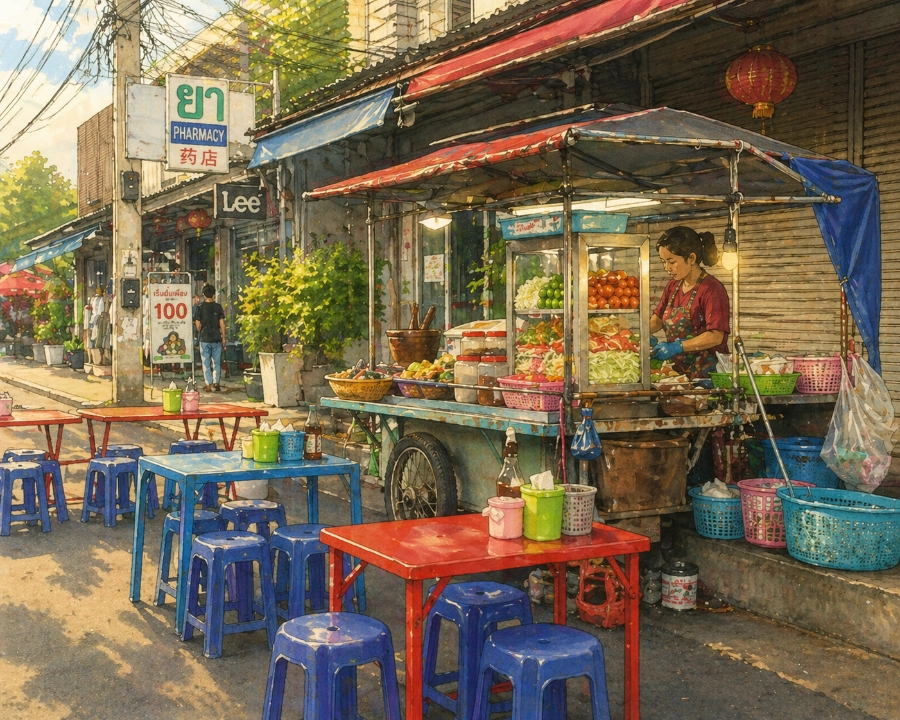
Imagine you’re standing at a busy Thai street stall. The air smells like grilled pork and chili. The vendor smiles and asks:
เอาอะไรคะ?
(What would you like?)
By the end of this lesson, you’ll be able to answer her confidently.
Mini Grammar – How Ordering Works
Basic Pattern:
เอา + [food] + ค่ะ
เอา = to take / to get
[food] = the dish you want
ค่ะ = polite particle (female speaker)
Example:
เอาผัดไทยค่ะ
(I’ll take pad thai.)
Add Variation: Softer Version
You can also use:
ขอ + [food] + ค่ะ
This sounds slightly softer and more polite.
Example:
ขอผัดไทยค่ะ
(May I have pad thai.)
When the Vendor Responds
เอาเผ็ดไหมคะ?
(Do you want it spicy?)
ใส่ไข่ไหมคะ?
(Add egg?)
กินที่นี่หรือใส่ถุงคะ?
(Eat here or take away?)
ไม่เผ็ดค่ะ
(Not spicy.)
เผ็ดนิดหน่อยค่ะ
(A little spicy.)
ใส่ไข่ค่ะ
(Yes, add egg.)
ใส่ถุงค่ะ
(To go.)
Counting Food (Useful Upgrade)
In Thai, food is often counted using classifiers.
หนึ่งจาน
(one plate)
สองไม้
(two skewers)
หนึ่งถุง
(one bag)
หมูปิ้งสองไม้ค่ะ
(Two pork skewers.)
ข้าวมันไก่หนึ่งจานค่ะ
(One plate of chicken rice.)
Vocabulary
Craving Thai street food? This lesson teaches you the most common dishes and ingredients (with audio), then lets you lock them in with flashcards.
Quick grammar tip: to politely order, use ขอ (khǒ) or เอา (ao) + [food] + ค่ะ/ครับ. Thai also loves classifiers: ขอผัดไทย 1 จานครับ = I’d like one plate of pad thai.
Mark any words you already know so you won’t get quizzed on them in the lesson.

Say It Yourself
Look at the English. Say the Thai out loud before checking.
I’ll take grilled chicken.
I’ll take green curry.
I’ll take boat noodles.
Not spicy, please.
To go.
เอาไก่ย่างค่ะ
เอาแกงเขียวหวานค่ะ
เอาก๋วยเตี๋ยวเรือค่ะ
ไม่เผ็ดค่ะ
ใส่ถุงค่ะ
Flashcards
This section allows you to actually memorize the words and phrases in this lesson. Practicing with this game will help you to actually put the words in your memory so you can use them when you need them.
Sentence Pattern
Now plug those foods into an easy ordering pattern: “I’d like [food] ค่ะ/ครับ.” Add classifiers for extra Thai-ness, e.g., ขอไก่ทอด 2 ชิ้นค่ะ = I’d like two pieces of fried chicken.
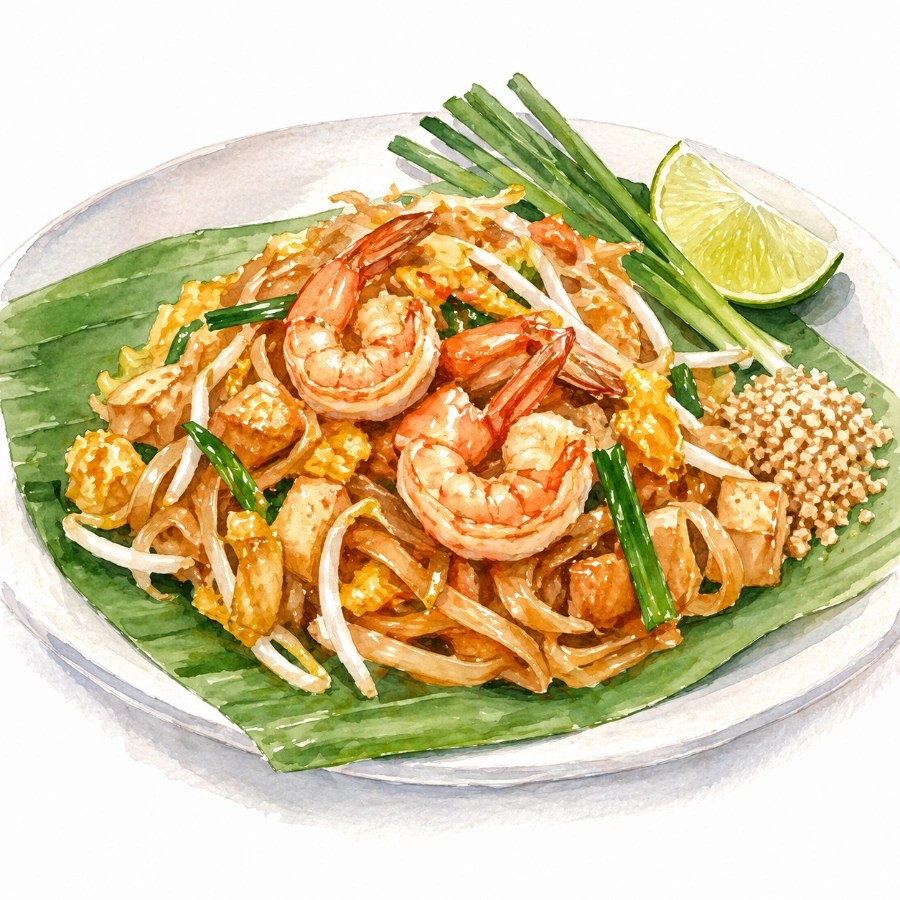
เอาผัดไทยคะ
I'll take pad thai.
เอาผัดกะเพราคะ
I'll take pad kra pao.


เอาผัดขิงคะ
I'll take pad king.
เอาผัดซีอิ๊วคะ
I'll take pad see ew.


เอาข้าวผัดคะ
I'll take fried rice.
เอาต้มยำกุ้งคะ
I'll take tom yum goong.

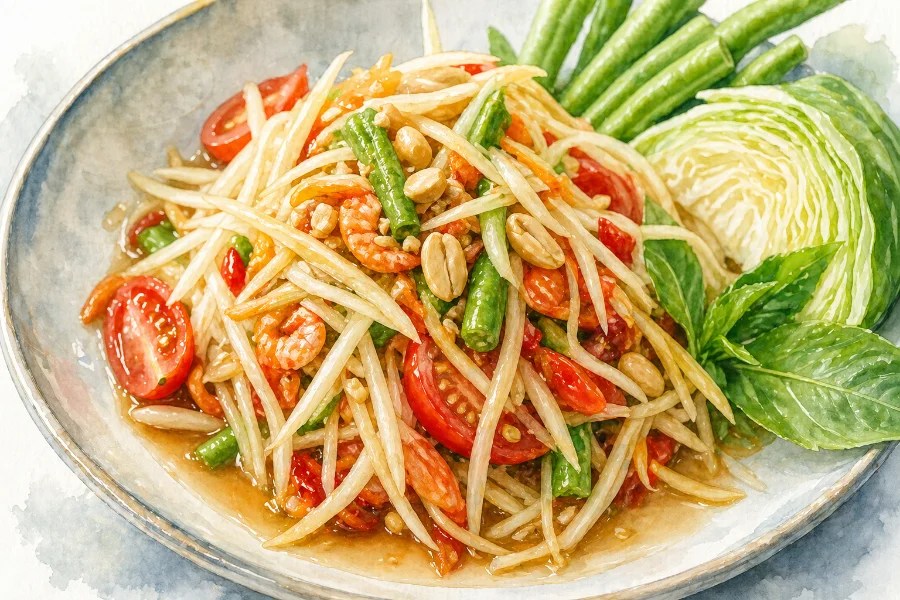
เอาส้มตำคะ
I'll take som tam.
เอาลาบคะ
I'll take larb.


เอาคอหมูย่างคะ
I'll take grilled pork neck.
เอาหมูปิ้งคะ
I'll take moo ping.


เอาไก่ย่างคะ
I'll take grilled chicken.
เอาข้าวมันไก่คะ
I'll take chicken rice.


เอาข้าวขาหมูคะ
I'll take pork leg rice.
เอาก๋วยเตี๋ยวเรือคะ
I'll take boat noodles.


เอาก๋วยเตี๋ยวต้มยำคะ
I'll take tom yum noodles.
เอาเย็นตาโฟคะ
I'll take yen ta fo.


เอาราดหน้าคะ
I'll take rad na.
เอาหอยทอดคะ
I'll take oyster omelet.


เอาขนมจีนคะ
I'll take khanom jeen.
เอาแกงเขียวหวานคะ
I'll take green curry.


เอามัสมั่นคะ
I'll take massaman.
เอาปอเปี๊ยะทอดคะ
I'll take spring rolls.


เอาทอดมันปลาคะ
I'll take fish cakes.
เอาข้าวเหนียวหมูปิ้งคะ
I'll take sticky rice with pork.


เอาขนมครกคะ
I'll take khanom krok.
เอาโรตีคะ
I'll take roti.


เอากล้วยทอดคะ
I'll take fried bananas.
เอาลูกชิ้นปิ้งคะ
I'll take grilled meatballs.


เอาปลาหมึกย่างคะ
I'll take grilled squid.
เอาข้าวหมูแดงคะ
I'll take red pork rice.

Street Food Confidence Tips
Orders are usually short and direct.
Smiling helps.
Pointing at food is normal.
Vendors expect simple phrases.